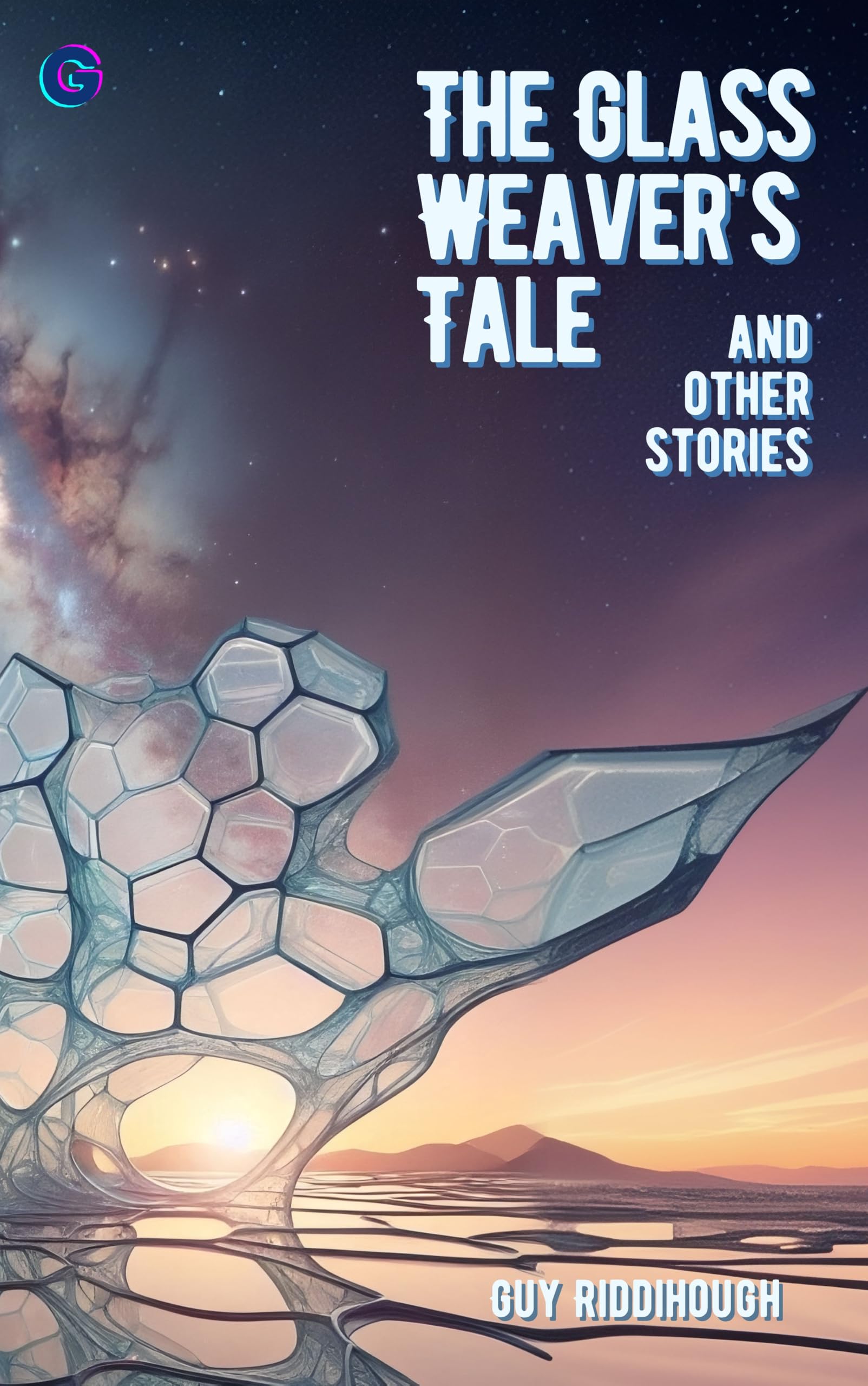
The Glass Weaver's Tale
Guy Riddihough
302 pages
Synopsis
While science fiction is a reflection on our possible futures, it is also a mirror on the present. The best science fiction bends the mirror's surface to twist what we take for granted today into a vision of the future. The seven stories in The Glass Weaver's Tale And Other Stories look into the mirror of the present and capture reflections from shards of both the near and far future, of the Earth, and of places unlike and far distance from the Earth, and of us, of people who might have once been like us, of societies we may yet be part of, and of others who are unlike us and yet at the same time uncomfortably familiar. Science is at the core of most good science fiction and so it is with these seven stories. In The Patter of Tiny Feet, the consequences of the effects of continued human population growth are explored, to their ultimate limit. Needle and Groove considers the power to change the past and whether and how such a genie could ever be put back into its bottle. The deformation of a society trapped within the confines of a self-contained microcosm is explored through the relationship of two brothers in The Boy Who Built A Rocket Ship. Café Arabica asks how the multiverse might impinge upon the daily lives of people like you and I, and what the real consequences of such parallel worlds might be. Aliens who fall in love with the Earth in Holiday Home unwittingly become their own worst enemies and the engine that drives the major evolutionary transitions on Earth. Love, that most powerful of human emotions, is the motivation that drives the story of The Other David Kindlebach, a search for those things most precious to us that have been lost forever. Finally, The Glass Weaver's Tale is a story of human biology and human society engineered to the extreme, in the hope of saving us from ourselves, and how it might be possible to break free from such shackles.